
23 Oct 2024
New recommendations for housebuilders published based on unique new university research
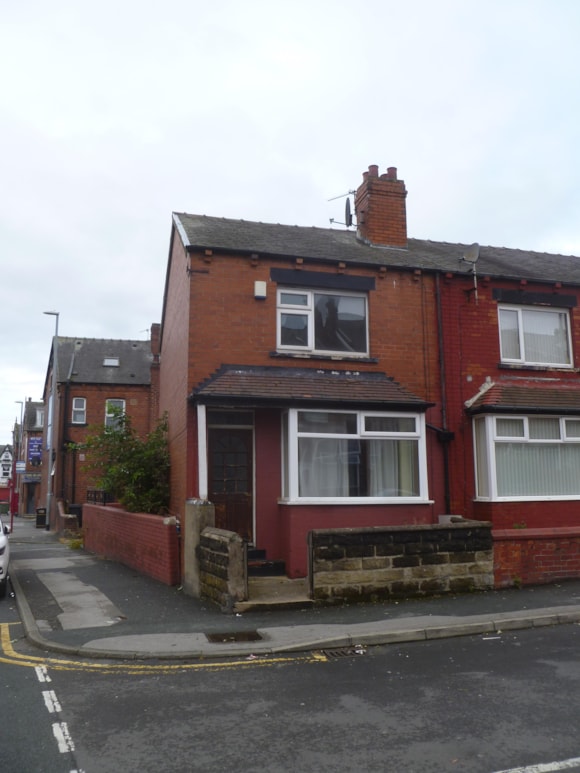
New recommendations have been published to share best practice approaches to retrofitting homes – and update and improve the accuracy of Energy Performance Certificates (EPC) - through new research led by Leeds Beckett University.
The £3 million Demonstration of Energy Efficiency Potential (DEEP) project was commissioned by the Government’s Department for Energy Security and Net Zero. Investigating the retrofit (making energy efficiency improvements) of solid walled homes, it is one of the largest research studies of its kind to have ever been attempted in the UK.
The research was carried out by the Leeds Sustainability Institute (LSI) at Leeds Beckett University in collaboration with the University of Salford and Loughborough University.
The research found that insulating the UK’s eight million solid walled homes has the potential to cut energy bills by 30 per cent in some homes, and is essential to achieve domestic energy efficiency targets. Although solid wall insulation is expensive and tricky to install safely and effectively, the team found that there are many benefits to homes. These include: being cheaper to run, feeling warmer in winter and cooler in summer, having better air quality, and having less chance of condensation occurring.
Professor David Glew, Director of the LSI at Leeds Beckett University, said: “Our research is done in real homes - so we understand how buildings perform in the real world, not just in labs and models. Solid walled homes are among the least energy efficient – occupants are more likely to be in fuel poverty, and condensation, damp and mould problems can be common.
“Solid walled homes tend to have EPCs lower than Band C – the Government’s Clean Growth Strategy aims for as many homes as possible to attain an EPC rating of Band C by 2035. Our research found that insulating the solid walls of a home can achieve EPC Band C and could save up to 30 per cent per year for some homes on their energy bills. It was by far the single most effective retrofit measure for solid walled homes - other types of retrofit often don’t achieve the required improvement – and so will be essential for tackling fuel poverty.
“At the moment, only 7%* of all retrofits taking place under the Energy Company Obligation (ECO) - the Government’s fuel poverty policy - are delivering solid wall insulation, since they are so costly and difficult to install. So, we hope this research can help shine a light on how important solid wall insulation is for the nation.”
This new research measured how much the energy efficiency of the homes was improved by adding insulation and compared this with the predictions made by the homes’ EPCs. The study found that substantial improvements could be achieved. EPCs overestimated the heat loss measured in the project’s case study homes by an average of 42% - and were more accurate when measured data was used, for example through airtightness tests.
EPCs currently use estimated or default values for these heat losses – based on information such as the age of the home. A key recommendation from the research is therefore to update and improve the range of input and default data that EPC assessors can use to improve accuracy.
The project compared different methods of retrofitting solid walled homes in England– installing a range of insulation and energy efficiency measures in addition to solid wall insulation, including: loft insulation, floor insulation, draughtproofing, and installing new windows and doors.
Predictions based on the project’s case study homes suggest fuel bill savings of between 11 and 29% for solid wall insulation alone - depending on the condition of the wall and how much external wall is insulated. When combined with other retrofit improvements, savings were modelled to be as high as 33% off annual bills.
The researchers recommend using a ‘whole-house approach’ to retrofitting – rather than installing individual ‘piecemeal’ measures at different times.
Professor Glew explained: “It is important that we insulate as many solid walled homes as possible, but also that we take great care when we do so - and the whole house approach is one way to achieve this. Although it is more expensive to deliver, it can bring significant benefits to households.
“This is the first time that research has compared the impact of taking a whole house approach to insulation measures to the cumulative impact of piecemeal retrofits added over time. What we found was that piecemeal work can result in homes having higher risks of condensation at discontinuities – or gaps in the insulation layer - whereas the whole house approach reduces the likelihood of this happening. Retrofit can also reduce the risk of overheating, especially when the whole house approach includes ventilation and shading, to make our homes ready for future hotter summers.”
The LSI is a unique research group of building performance researchers based at Leeds Beckett University. They are among the top research teams carrying out scientific field trials in the UK, to show how buildings perform in the real world - not just in labs or models.
Leeds Beckett is long established as a home for pioneering research into energy in homes. The co-heating test, which was characterised by LBU, measures the energy efficiency of buildings, and is now a global standard used worldwide. LSI research previously led to a change in building regulations which means all party walls in new homes in the UK now have to be insulated - resulting in hundreds of thousands of tonnes of CO2 being saved as a result of Leeds Beckett University research. It is hoped that this new research may have similar implications and result in improvements to retrofit policy and regulations.
Contact Information
Carrie Braithwaite
Research & Enterprise Communications Executive
Leeds Beckett University
0113 812 3027
c.braithwaite@leedsbeckett.ac.uk
Notes to editors
Notes for editors:
- * Source: Household Energy Efficiency Stats February 2024, available at https://assets.publishing.service.gov.uk/media/65de0a69f1cab3863afc46f0/HEE_Stats_Release_-_February_2024.pdf
- The Demonstration of Energy Efficiency Potential (DEEP) reports can be found at www.gov.uk/government/publications/demonstration-of-energy-efficiency-potential-deep
- The full DEEP video can be viewed at https://www.youtube.com/watch?v=A85QKEznkCE
- The Department for Energy Security and Net Zero commissioned the DEEP project which ran between 2019 and 2024. DEEP was undertaken by a consortium of Leeds Beckett University, the University of Salford and Loughborough University. Lucideon Ltd also undertook laboratory testing of brick samples and Thermal Image UK performed airtightness and retrofit surveys to support the project.
- The five-year research project involved carrying out 41 individual retrofits in 14 case study homes, and a whole house retrofit of four homes to study the difference between a piecemeal and whole house approach to insulation upgrades. As well as the deep dive into the case study homes, the researchers carried out a general survey of 150 homes in the UK, lab investigations in collaboration with the University of Salford, tests to examine the accuracy of Government-standard energy performance prediction methods (including EPCs), challenging the way in which moisture risk assessments are undertaken in collaboration with Loughborough University – and proposing approaches to improve these predictions and assessments.
- In the UK, eight million out of 29 million homes are solid walled – where each wall is a single solid wall usually made from stone, brick or concrete. These are older homes – those built from the 1960s onwards generally have cavity walls, which are built with two walls with a gap in between. From 1990 onwards, cavity walls have been built with insulation as standard.
- The School of Built Environment, Engineering and Computing is passionate about making a difference to the way we plan, design, construct, protect and maintain the world around us.
- As a leading centre of research in the UK, the Leeds Sustainability Institute (LSI) is undertaking internationally significant and powerful research on the energy efficiency of buildings.



Powered by Onclusive PR Manager © 2026